Back to searchBuy on AmazonFind LibraryOpen LibraryThe Structure of Scientific Revolutionsby Thomas Kuhn6Contains References To4Referenced ByDiscover ConnectionsContains References ToAdd ReferenceThe Origin of Speciesby Charles DarwinBuy on Amazon •Find Library The Copernican Revolutionby Thomas KuhnBuy on Amazon •Find Library The Logic of Scientific Discoveryby Karl PopperBuy on Amazon •Find Library The Structure of Scientific Revolutionsby Thomas KuhnBuy on Amazon •Find Library The Principiaby Isaac NewtonBuy on Amazon •Find Library The Interpretation of Culturesby Clifford GeertzBuy on Amazon •Find Library Referenced By These BooksAusterlitzby W. G. SebaldDescriptionA classic novel of post-war Europe, haunting and timelessly beautiful 'The greatest writer of our time' Peter Carey In 1939, five-year-old Jacques Austerlitz is sent to England on a Kindertransport and placed with foster parents. This childless couple promptly erase from the boy all knowledge of his identity and he grows up ignorant of his past. Later in life, after a career as an architectural historian, Austerlitz - having avoided all clues that might point to his origin - finds the past returning to haunt him and he is forced to explore what happened fifty years before. Austerlitz is W.G. Sebald's melancholic masterpiece. 'Mesmeric, haunting and heartbreakingly tragic. Simply no other writer is writing or thinking on the same level as Sebald' Eileen Battersby, Irish Times 'Greatness in literature is still possible' John Banville, Irish Times, Books of the Year 'A work of obvious genius' Literary Review 'A fusion of the mystical and the solid ... His art is a form of justice - there can be, I think, no higher aim' Evening Standard 'Spellbindingly accomplished; a work of art' The Times Literary Supplement 'I have never read a book that provides such a powerful account of the devastation wrought by the dispersal of the Jews from Prague and their treatment by the Nazis' Observer 'A great book by a great writer' Boyd Tonkin, Independent W . G. Sebald was born in Wertach im Allgäu, Germany, in 1944 and died in December 2001. He studied German language and literature in Freiburg, Switzerland and Manchester. In 1996 he took up a position as an assistant lecturer at the University of Manchester and settled permanently in England in 1970. He was Professor of European Literature at the University of East Anglia and is the author of The Emigrants, The Rings of Saturn, Vertigo, Austerlitz, After Nature, On the Natural History of Destruction, Campo Santo, Unrecounted, A Place in the Country. His selected poetry is published in a volume called Across the Land and the Water.Buy on Amazon •Find Library Zero to Oneby Peter ThielDescriptionNotes on Startups, or How to Build the FutureBuy on Amazon •Find Library The Structure of Scientific Revolutionsby Thomas KuhnBuy on Amazon •Find Library The Singularity is Nearby Ray KurzweilDescriptionNEW YORK TIMES BESTSELLER • Celebrated futurist Ray Kurzweil, hailed by Bill Gates as “the best person I know at predicting the future of artificial intelligence,” presents an “elaborate, smart, and persuasive” (The Boston Globe) view of the future course of human development. “Artfully envisions a breathtakingly better world.”—Los Angeles Times “Startling in scope and bravado.”—Janet Maslin, The New York Times “An important book.”—The Philadelphia Inquirer At the onset of the twenty-first century, humanity stands on the verge of the most transforming and thrilling period in its history. It will be an era in which the very nature of what it means to be human will be both enriched and challenged as our species breaks the shackles of its genetic legacy and achieves inconceivable heights of intelligence, material progress, and longevity. While the social and philosophical ramifications of these changes will be profound, and the threats they pose considerable, The Singularity Is Near preseBuy on Amazon •Find Library
Austerlitzby W. G. SebaldDescriptionA classic novel of post-war Europe, haunting and timelessly beautiful 'The greatest writer of our time' Peter Carey In 1939, five-year-old Jacques Austerlitz is sent to England on a Kindertransport and placed with foster parents. This childless couple promptly erase from the boy all knowledge of his identity and he grows up ignorant of his past. Later in life, after a career as an architectural historian, Austerlitz - having avoided all clues that might point to his origin - finds the past returning to haunt him and he is forced to explore what happened fifty years before. Austerlitz is W.G. Sebald's melancholic masterpiece. 'Mesmeric, haunting and heartbreakingly tragic. Simply no other writer is writing or thinking on the same level as Sebald' Eileen Battersby, Irish Times 'Greatness in literature is still possible' John Banville, Irish Times, Books of the Year 'A work of obvious genius' Literary Review 'A fusion of the mystical and the solid ... His art is a form of justice - there can be, I think, no higher aim' Evening Standard 'Spellbindingly accomplished; a work of art' The Times Literary Supplement 'I have never read a book that provides such a powerful account of the devastation wrought by the dispersal of the Jews from Prague and their treatment by the Nazis' Observer 'A great book by a great writer' Boyd Tonkin, Independent W . G. Sebald was born in Wertach im Allgäu, Germany, in 1944 and died in December 2001. He studied German language and literature in Freiburg, Switzerland and Manchester. In 1996 he took up a position as an assistant lecturer at the University of Manchester and settled permanently in England in 1970. He was Professor of European Literature at the University of East Anglia and is the author of The Emigrants, The Rings of Saturn, Vertigo, Austerlitz, After Nature, On the Natural History of Destruction, Campo Santo, Unrecounted, A Place in the Country. His selected poetry is published in a volume called Across the Land and the Water.Buy on Amazon •Find Library
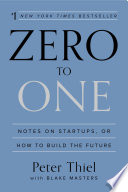
Zero to Oneby Peter ThielDescriptionNotes on Startups, or How to Build the FutureBuy on Amazon •Find Library
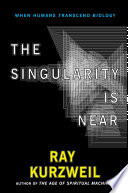
The Singularity is Nearby Ray KurzweilDescriptionNEW YORK TIMES BESTSELLER • Celebrated futurist Ray Kurzweil, hailed by Bill Gates as “the best person I know at predicting the future of artificial intelligence,” presents an “elaborate, smart, and persuasive” (The Boston Globe) view of the future course of human development. “Artfully envisions a breathtakingly better world.”—Los Angeles Times “Startling in scope and bravado.”—Janet Maslin, The New York Times “An important book.”—The Philadelphia Inquirer At the onset of the twenty-first century, humanity stands on the verge of the most transforming and thrilling period in its history. It will be an era in which the very nature of what it means to be human will be both enriched and challenged as our species breaks the shackles of its genetic legacy and achieves inconceivable heights of intelligence, material progress, and longevity. While the social and philosophical ramifications of these changes will be profound, and the threats they pose considerable, The Singularity Is Near preseBuy on Amazon •Find Library